The connected future in focus: XPENG presents the "Turing Physical AI" architecture
VLA 3.0: Next stage in the development of physical AI combines intelligence and physical capabilities
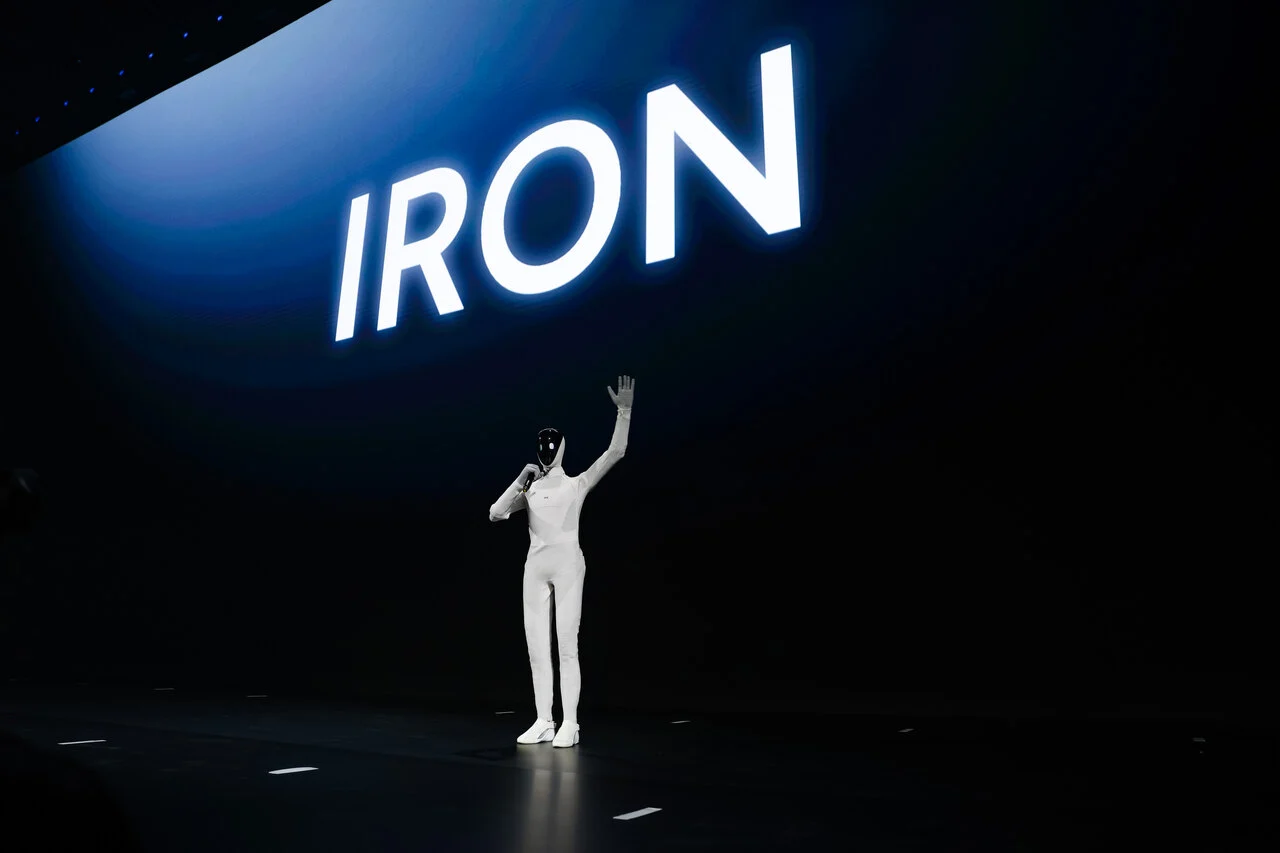
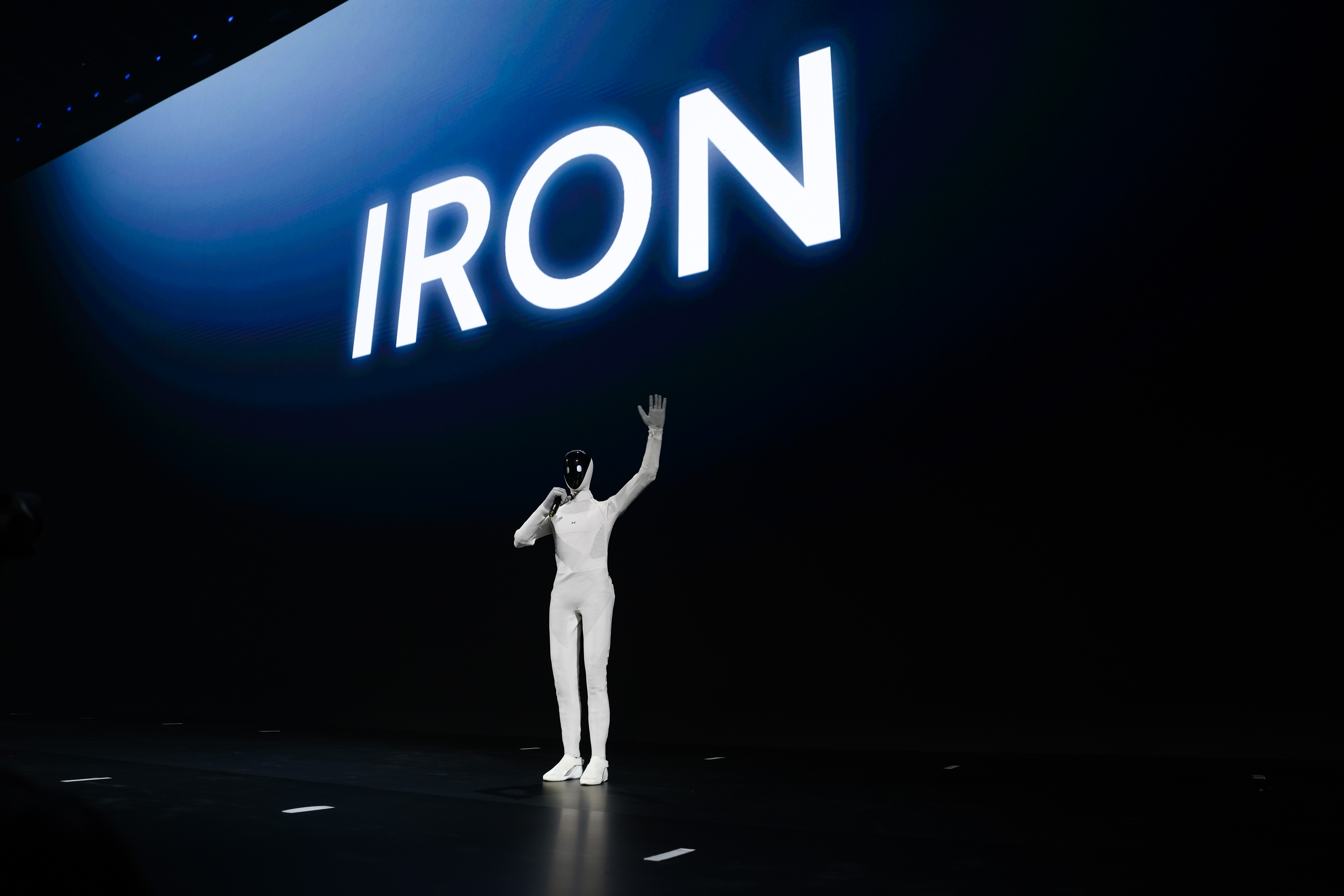
Advanced, versatile humanoid robot IRON makes its public debut
First XPENG Robotaxi model YOYO-01 to hit the market in 2027
jpg
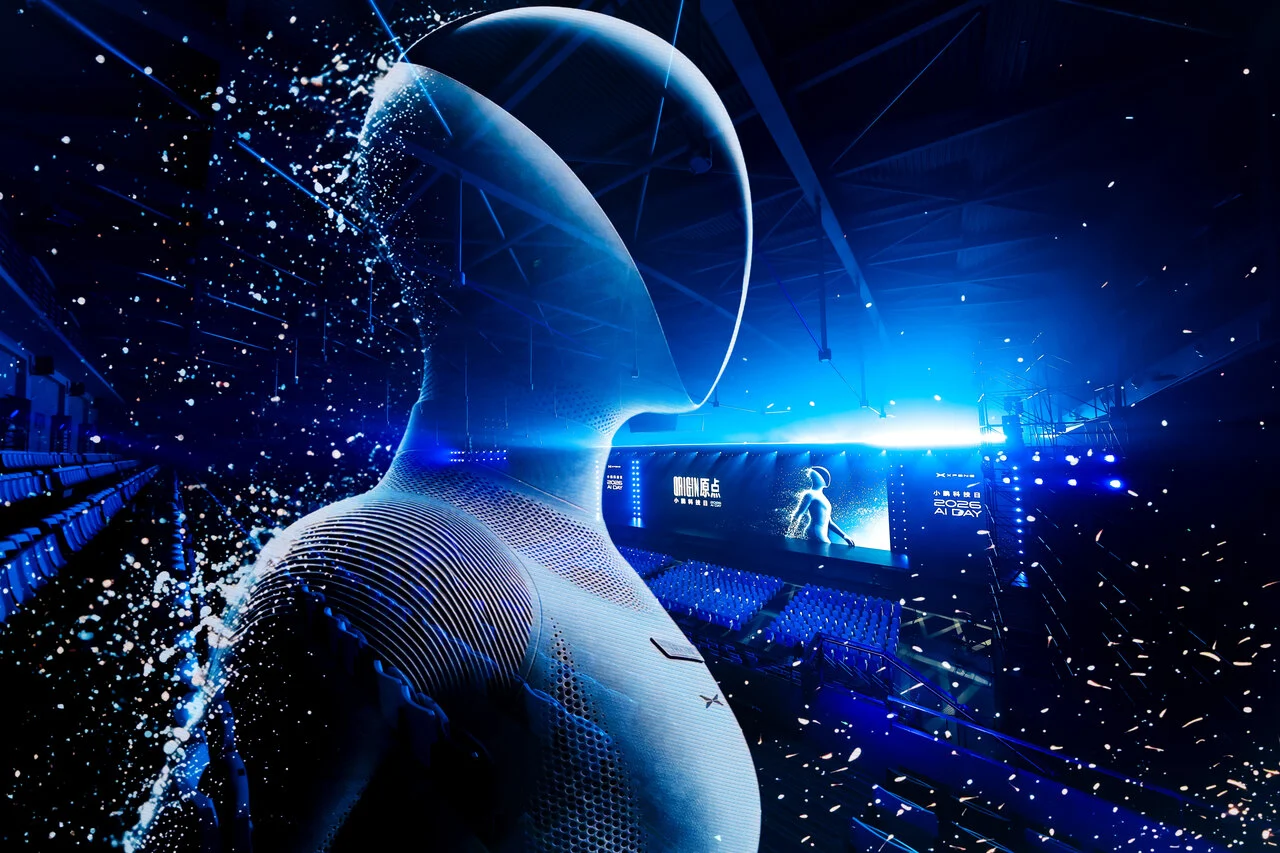
XPENG AI Day "Origin" - Guangzhou 2026
Guangzhou (China), 26. November 2026 – XPENG is driving intelligent mobility forward - in everyday life, on the road and in the air. As part of this year’s AI Day, the Chinese high-tech company unveiled its new "Turing Physical AI" architecture (VLA 3.0). As the foundation for intelligent vehicles and humanoid robots, it combines cognitive perception, real-time decision-making and physical execution.
Rather than focusing on individual AI models or hardware components, XPENG is building the entire technology stack - from proprietary chips and AI models to perception, software, control systems and hardware. The goal: to enable the use of artificial intelligence (AI) in the real world. The architecture unveiled today lays the shared technological foundation for XPENG’s intelligent vehicles and humanoid robots, while also supporting the company’s expansion into autonomous mobility and aircraft.
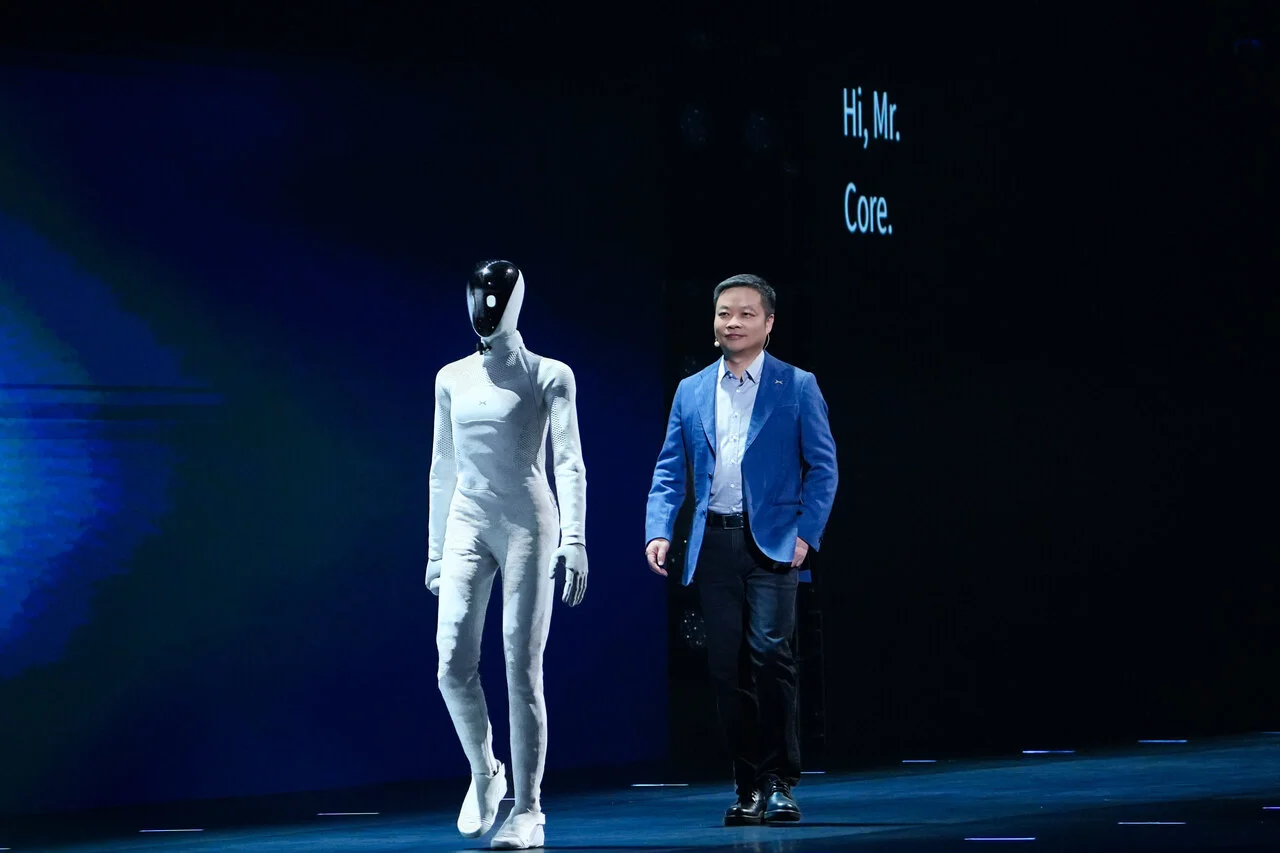
"For years, the AI industry has focused on making the 'brain' smarter. But humans do not learn with the brain alone. We learn by touching, moving, trying, failing and trying again. I believe physical AI must develop in the same way," explained He Xiaopeng, Chairman and CEO of XPENG. "Brain and body must evolve together. By linking intelligence with physical action, we want to foster an AI that not only understands our world, but can work with us and grow through experience in the real world."
jpg
XPENG AI Day "Origin" - Guangzhou 2026
Building a complete technology stack for physical AI
The Turing architecture for physical AI combines three systems that operate at different levels and speeds:
System 0 – ultra-fast system: As the foundation, it integrates the control of a physical body into the closed AI control loop. It coordinates the underlying hardware systems for performance, energy, communication and execution, and gives the AI direct feedback on the body’s condition and its ability to act safely and effectively.
System 1 – fast system: Built on XPENG’s VLA 2.0 model, it serves as a real-time response layer. It interprets the environment and quickly translates that understanding into executable actions.
System 2 – slow system: It enables higher-level cognition and combines visual-language-based task planning with an "Agent Runtime" state to interpret goals, plan complex tasks and coordinate the actions required to complete them.
The architecture combines agency and multimodal understanding, linking AI models with computing power, control systems and physical hardware. In a continuous control loop, the three systems connect cognitive processes with physical execution: information about the vehicle’s current state and the results of each action flow back, enabling ongoing adaptation and optimisation.
The latest version 6.4.0 of the VLA 2.0 model also supports agent-driven autonomous closed-loop training, increasing overall training speed by a factor of ten to twelve. The process also includes recursive self-improvement (RSI) and model self-distillation, enabling faster model development and adaptation across different computing platforms.
The shared technological architecture supports XPENG’s developments in both the automotive sector and robotics. Both areas use shared computing, data infrastructure, control and safety technology, but receive specialised functions for their respective hardware and tasks. While experience from research and development, testing and manufacturing in the automotive sector is also incorporated into robotics, advances in robot sensing and interaction can flow into future driving experiences.
jpg
XPENG AI Day "Origin" - Guangzhou 2026
Physical AI in the vehicle: the car as a robot
XPENG is extending the use of AI beyond autonomous driving. The vehicle motion control system "X-VMC 2.0" links propulsion, braking, steering, suspension and other vehicle systems, enabling AI to influence driving behaviour, safety, cabin comfort and energy management.
One example is the new "Turing AI Co-driving", which integrates intelligent driving functions even more closely into everyday life. The adaptive deceleration "VLA Adaptive Deceleration" uses an understanding of the traffic situation to adjust braking behaviour and energy recovery as soon as the foot is lifted off the accelerator pedal. According to initial internal tests in urban stop-and-go traffic, usable range can increase by 12.4 percent as a result. The function is scheduled to be introduced via OTA update from December 2026.
The technology still under development, "AEX Active 360-Degree Evasion", coordinates vehicle movement when a collision is imminent. Since the introduction of the VLA 2.0 model, XPENG has recorded a decline of almost 14 percent in accident damage in China.
The Next Generation Pilot (NGP), based on VLA 2.0, is currently being validated in various markets (including Germany, France and the Netherlands) and driving environments. In November 2026, XPENG launched public NGP test drives in urban traffic near its Paris showroom - the first Chinese automaker in Europe to demonstrate its advanced driver assistance systems on public roads. Subject to legal requirements and regulations, the company is aiming for a global NGP rollout in the first half of 2027.
Developing a humanoid robot: brain and body in harmony
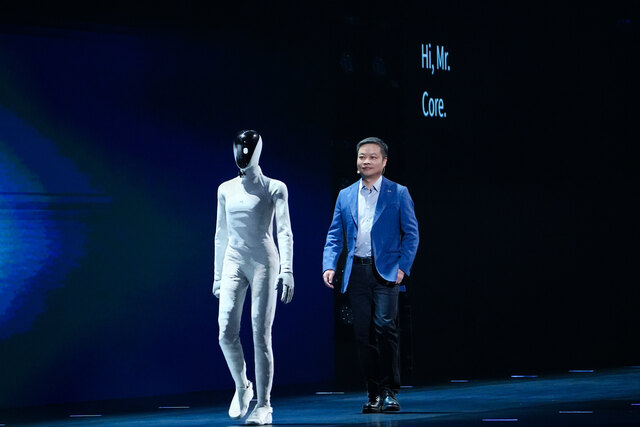
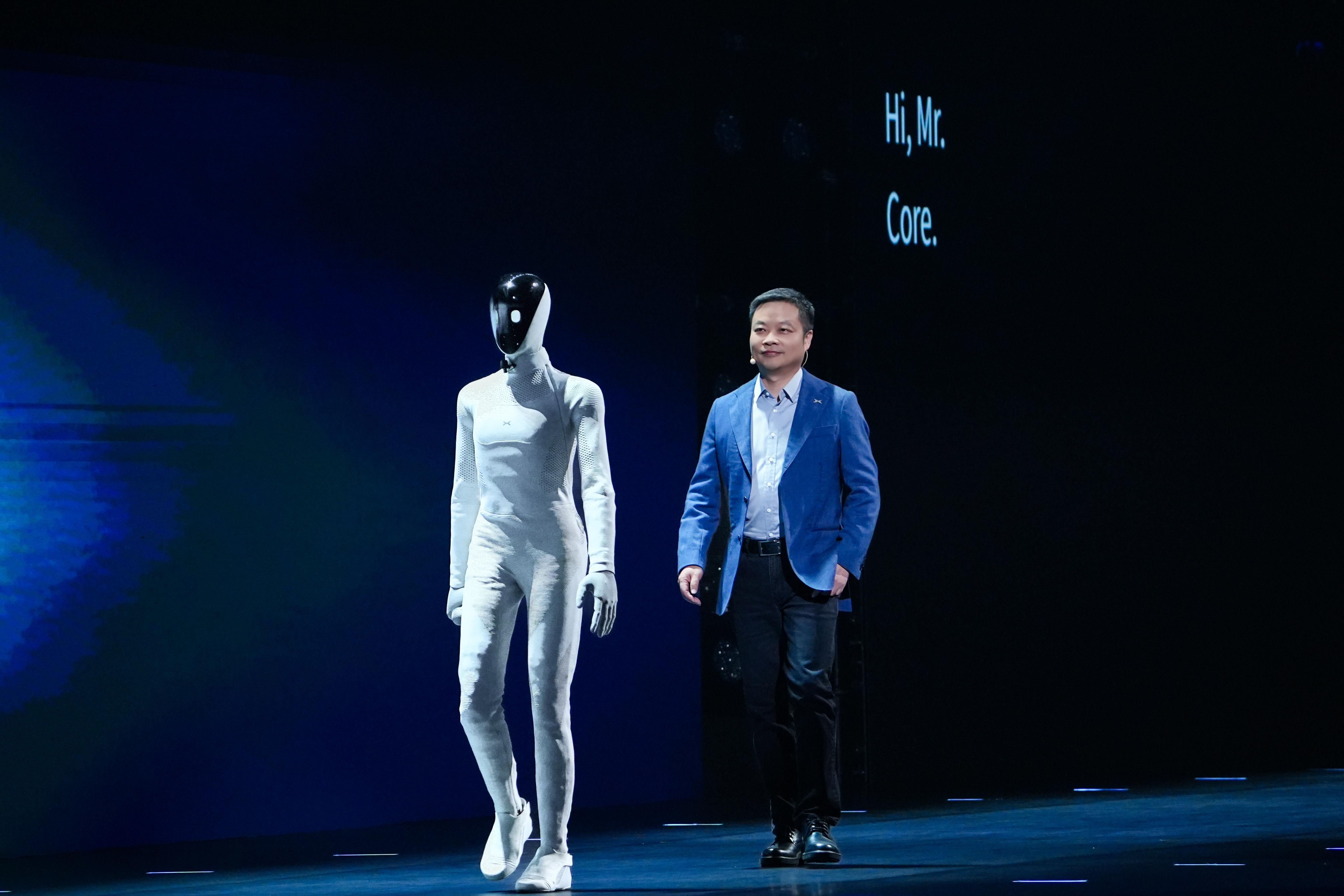
XPENG is applying the same integrated approach to its humanoid robot: IRON has 76 degrees of freedom and more than 1,500 tactile sensor points. Three in-house developed Turing AI chips support the integrated AI models and body control. Its architecture combines multimodal understanding, task planning and navigation with physical execution and safety monitoring.
As a partner for real-world tasks, IRON will initially be deployed as a sales assistant at XPENG locations from the first quarter of 2027. The official market launch is planned for the second quarter of 2027.
To further its development, XPENG has established a "Robot Data Factory". It covers more than 250 scenarios and 15 occupational categories and uses the data processing and validation tools known from the automotive division. A dedicated automated assembly line includes more than 600 holographic AI quality inspection points as well as over 1,000 tests for complete robots and key components.
XPENG is also developing an open robotics ecosystem through which partners can customise functions and develop and validate new capabilities for specific business applications. The company’s business model includes hardware sales, software subscriptions and the open platform.
Extending physical AI from the road to the air
XPENG is also using its technological base for higher levels of autonomous mobility and new modes of transport. Its in-house Robotaxi programme received approval for autonomous driving demonstrations at L4 level in Guangzhou, China, just eleven months after the announcement. Testing is already under way, with demonstration operations in selected areas planned by the end of the year. XPENG is positioning itself as a technology provider that offers partners both vehicle platforms and autonomous driving functions. The launch of its first Robotaxi developed specifically for commercial use, YOYO-01, is planned for 2027.
Beyond road transport, XPENG ARIDGE is advancing its crewed eVTOL programme. The company has already received type certification approval and completed flight tests for certification. In the United Arab Emirates (UAE), ARIDGE is working with local partners to create the technical conditions for further tests and to explore international cooperation opportunities.
AI-defined vehicles, humanoid robotics and autonomous mobility: At the Guangzhou Auto Show (through 30 November 2026), XPENG presented the next phase of its “Physical AI” strategy. The Chinese high...
Under the motto “ORIGIN”, XPENG will present its latest advances in physical AI, humanoid robotics and next-generation mobility technologies as part of its annual AI Day on 25 November 2026. The fo...
XPENG remains at the top: The Chinese high-tech automotive brand has the most satisfied EV drivers in Germany, Austria and Switzerland. Its successful title defense in the annual satisfaction ranki...