- Next Generation Pilot (NGP) takes driver assistance to a new level
- Successful testing with an XPENG L03 in Munich city traffic
- Global rollout subject to the following legal framework conditions
Munich/Dielsdorf, July 17, 2026 – XPENG paves the way for autonomous driving: At the XPENG Brand Day & New Product Launch Event in Munich on July 16, 2026, the Chinese high-tech automotive brand announced significant progress in the next generation of its intelligent driver assistance systems. The so-called Next Generation Pilot (NGP), based on the second generation of the Vehicle-Language-Action Architecture (VLA 2.0), is set to be launched globally as early as 2027 and will enable Level 2++ autonomous driving – subject to legal and regulatory approvals. The announcement of this global launch of XPENG NGP follows successful practical tests on European roads and corresponding regulatory developments by the United Nations (UN).
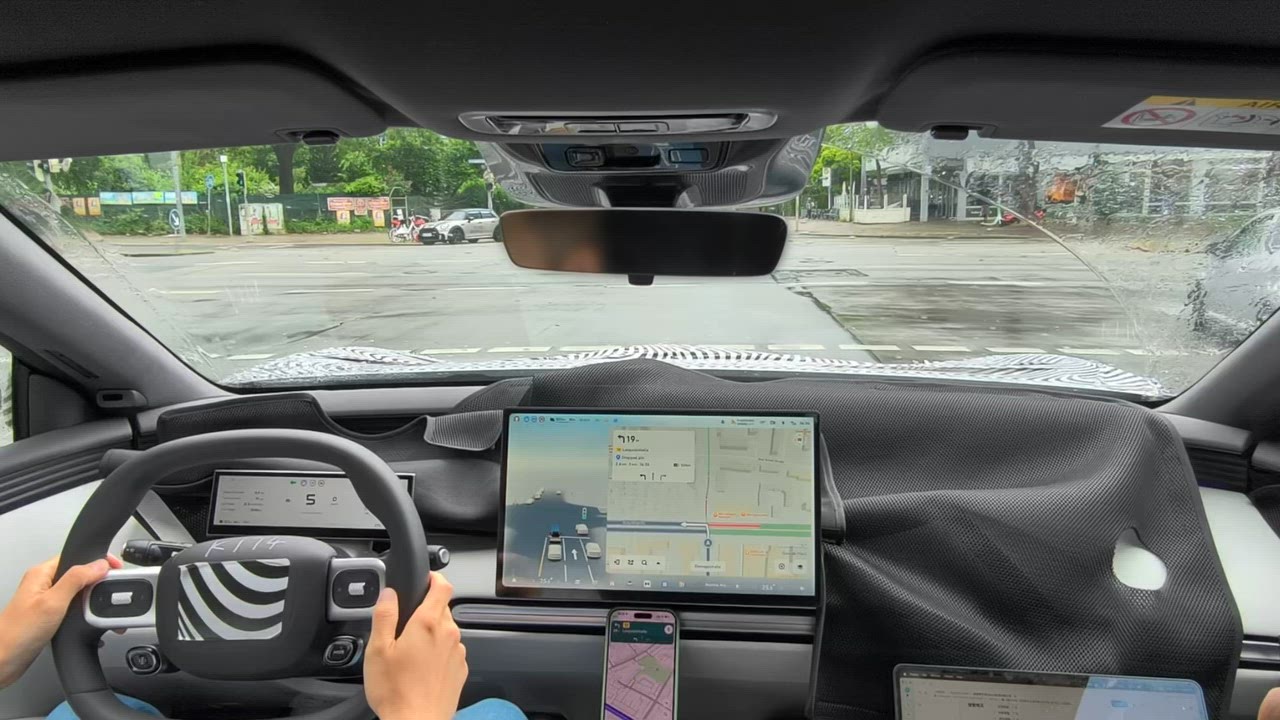
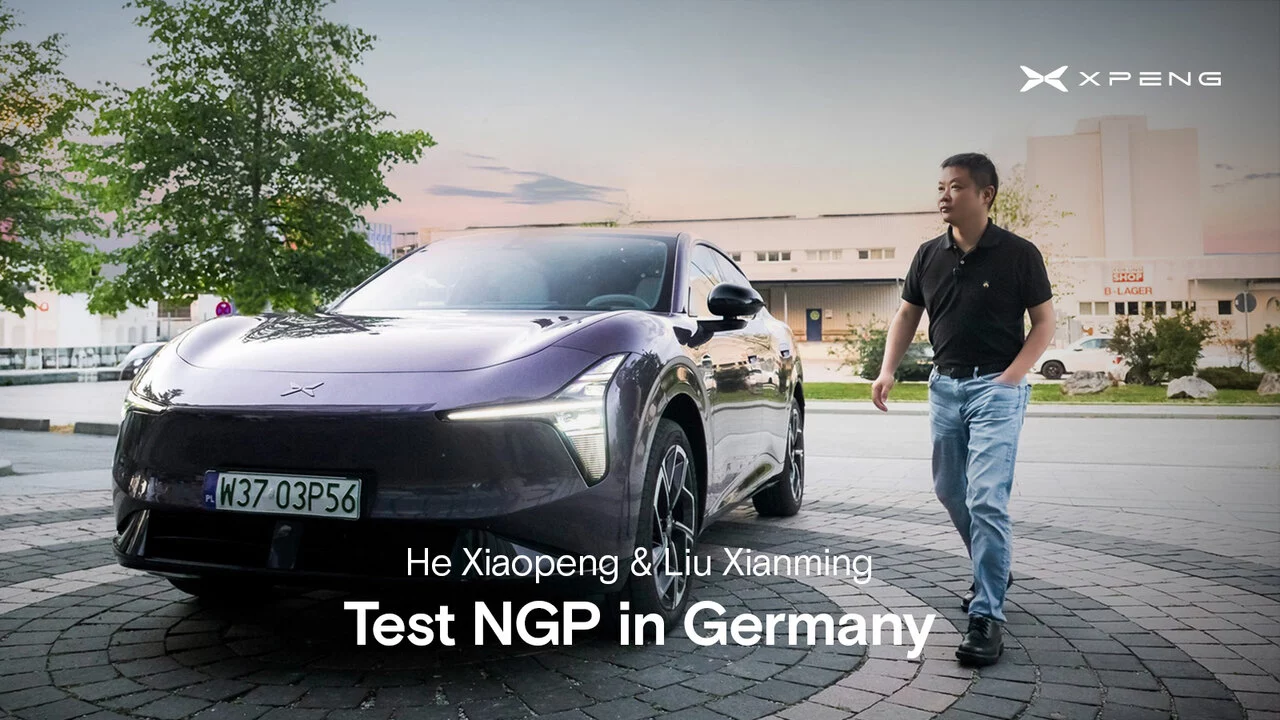
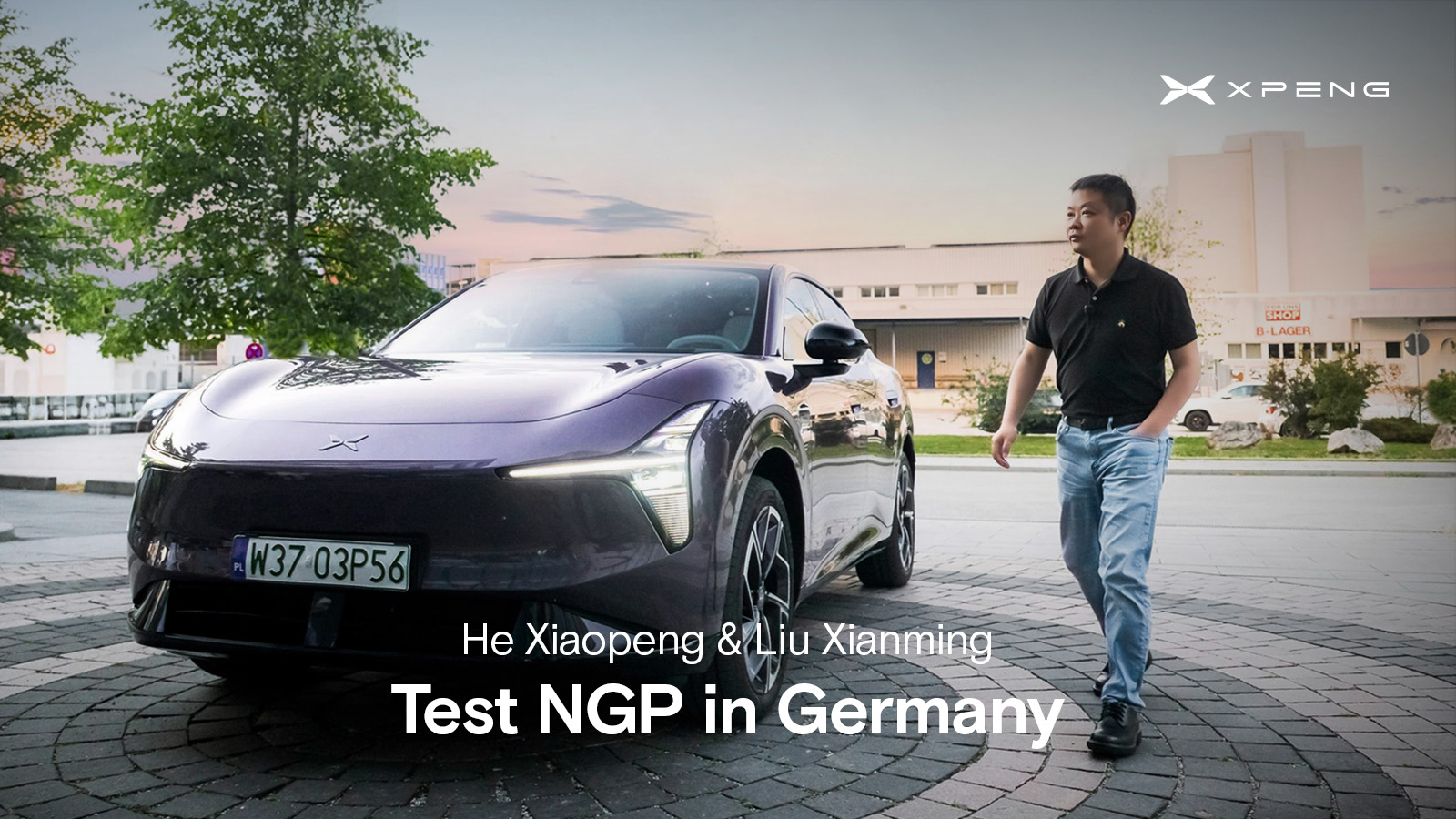
He Xiaopeng, Chairman and CEO of XPENG, and Liu Xianming, Head of the XPENG General Intelligence Center (GIC), experienced the capabilities of XPENG NGP for themselves in Munich city traffic: In the new XPENG L03 (combined energy consumption 15.3-18.4 kWh/100 km; combined CO2 emissions: 0 g/km; energy efficiency category: B/C – combined values according to WLTP subject to final homologation), the SUV coupé presented to the world public for the first time in Munich, they drove through the Bavarian capital. After the test drive, He Xiaopeng was extremely satisfied with the results and reaffirmed the company's confidence in the performance of the technology.
“We are confident that we will be able to roll out the full functions of NGP (VLA 2.0) internationally at the beginning of 2027,” said He Xiaopeng. “Once the regulatory requirements are met, XPENG aims to be the first Chinese manufacturer to bring a fully integrated intelligent driving system with advanced braking functions to market that complies with international regulations.”
The planned international launch is supported by two groundbreaking decisions of the United Nations Economic Commission for Europe (UNECE/WP.29):
- UNR 171 Series 02 (DCAS) creates the regulatory framework for urban NGP functions and is expected to become part of European law by the end of 2026.
- UNR ADS for automated driving levels L3 to L5 is expected to significantly accelerate the approval of autonomous mobility solutions worldwide, especially L4 robotaxis.
These developments lay the foundation for the introduction of modern driver assistance and automated driving systems in Europe and other international markets.
NGP (Next Generation Pilot) is XPENG's intelligent driving technology, which is part of the company's proprietary Turing AI ecosystem. It is based on the second generation of the Vision-Language-Action model (VLA 2.0), which was presented in November 2025 and, according to the company, provides the industry's first L4 autonomy-oriented framework for the physical world. Series deliveries in China began in March 2026.
Already in the first month after market launch, the system recorded significant performance improvements:
The software architecture combines assisted driving functions (L2) with the requirements of future autonomous driving systems (L4). The first production robotaxi from XPENG based on NGP (VLA 2.0) is already undergoing internal road testing in China.
The public test drives in Munich confirm the adaptability of NGP (VLA 2.0) to European traffic rules and driving habits. Among other things, the system demonstrated:
- precise detection of and response to particularly vulnerable road users such as pedestrians, cyclists, and e-scooter riders,
- safe behavior according to local traffic habits, for example the “right-before-left” priority rule at unmarked intersections.
Even complex traffic situations such as narrow old town streets, construction sites, roundabouts, or early lane changes to avoid parked vehicles were successfully managed with XPENG NGP.
To further localize its technologies, XPENG operates a research and development center in Munich. There, under the guiding principle “In Europe, for Europe”, products, customer service, and charging infrastructure are further developed specifically for the European market.
The VLA 2.0 platform is based on a fully end-to-end AI architecture. It requires neither high-resolution maps nor LiDAR sensors and learns directly from real driving maneuvers, eliminating the need for manual data annotation. This allows the system to be continuously improved with very large amounts of data.
Another unique feature is the cross-domain use of the same AI platform for passenger cars, robotaxis, humanoid robots, and flying vehicles. The necessary computing power is provided by XPENG's self-developed Turing AI chip: In the ultra version of the new XPENG L03, three chips with a total performance of up to 2,250 TOPS are used.
For XPENG, 2026 is dedicated to technical preparation and regulatory approval processes. From 2027, the company plans the international rollout of NGP (VLA 2.0) in those markets where the legal requirements are met. The introduction will take place gradually via over-the-air update.
With the successful tests in Munich, XPENG underlines its ambition to drive intelligent mobility based on artificial intelligence internationally and to provide the next generation of automated driving functions for global markets.