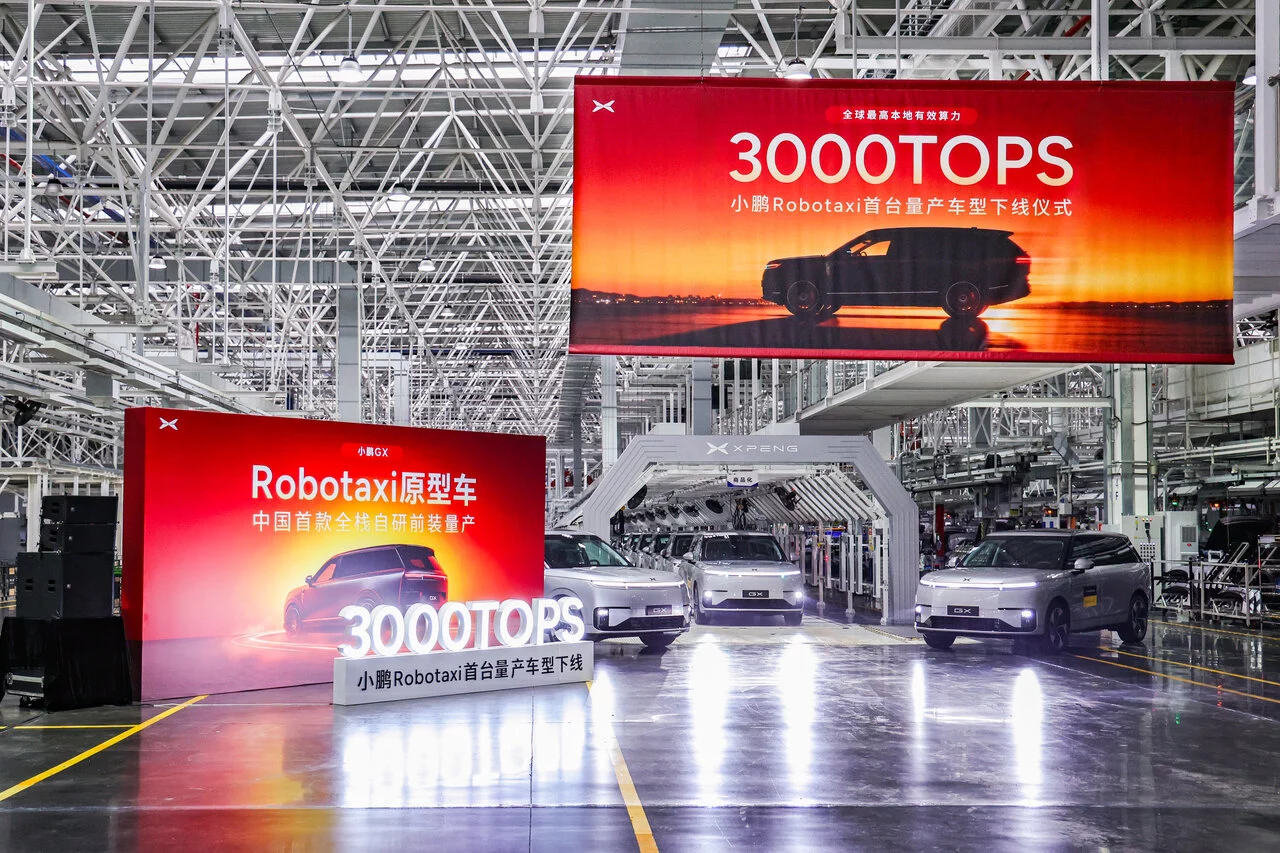
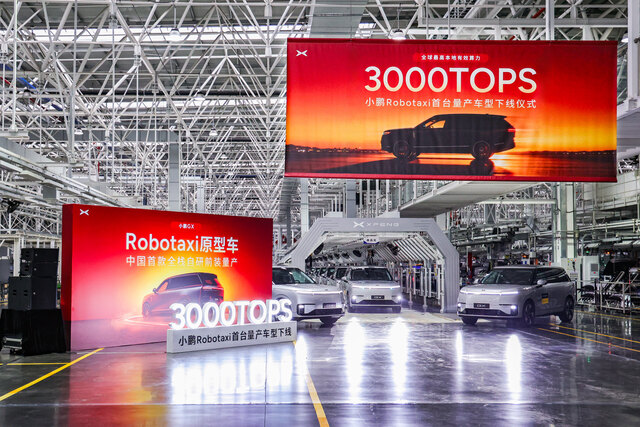
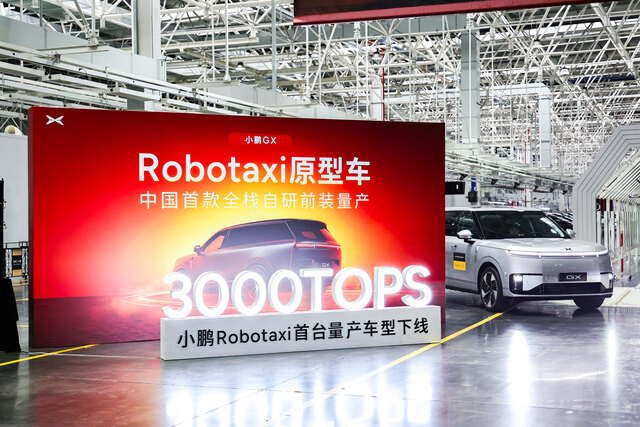
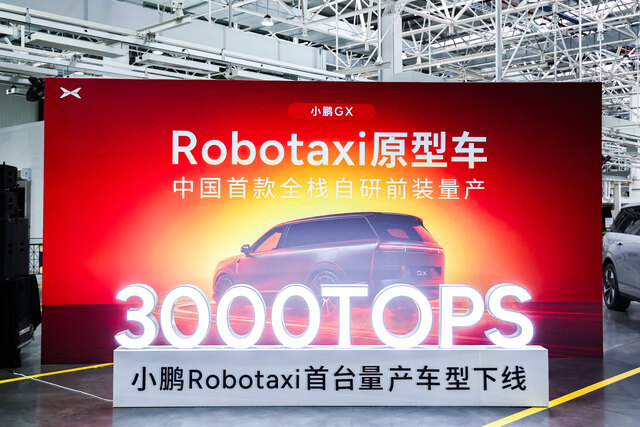
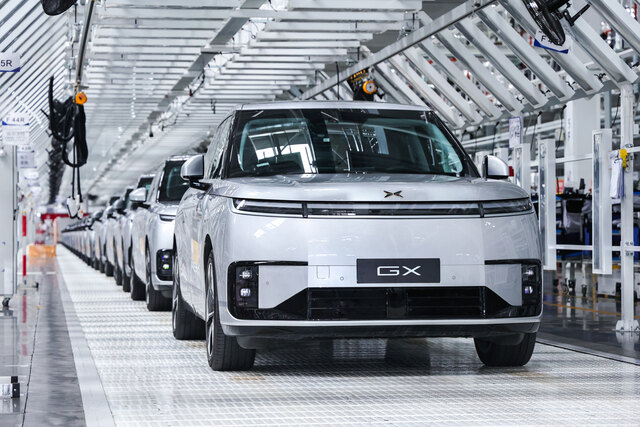
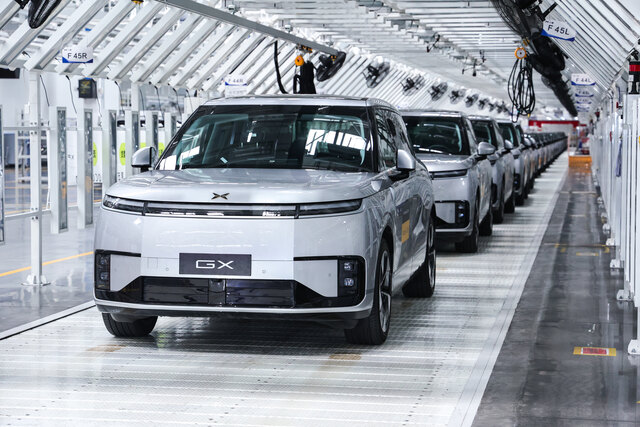
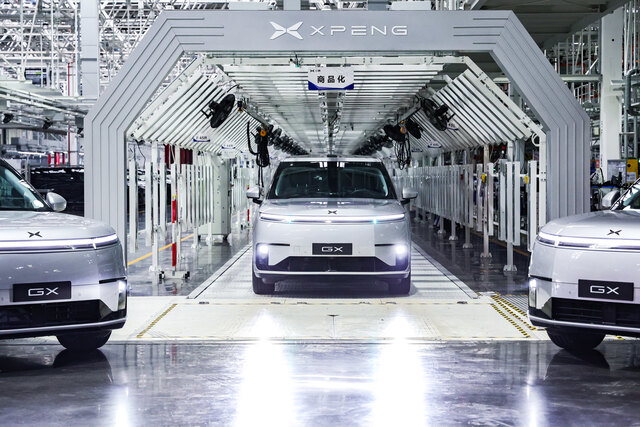
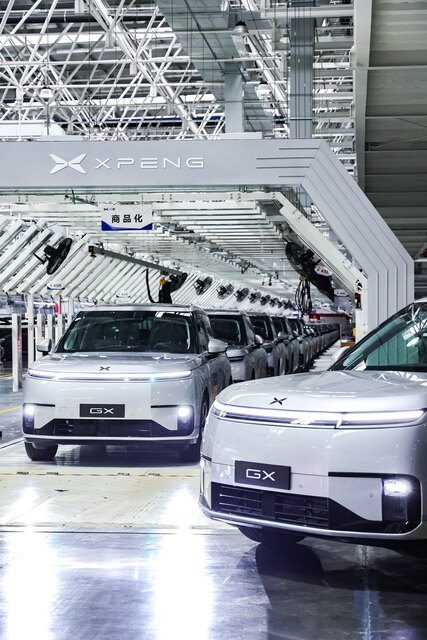
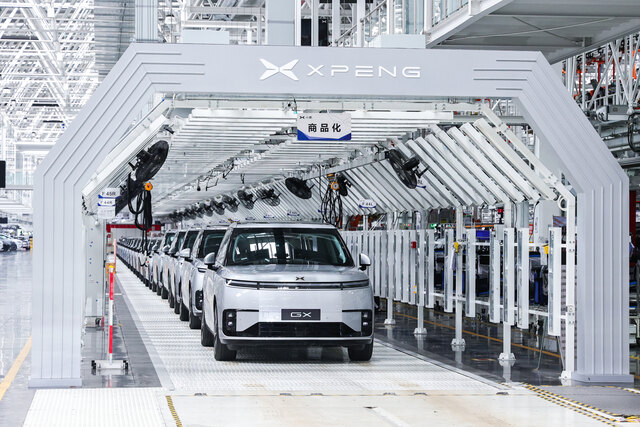
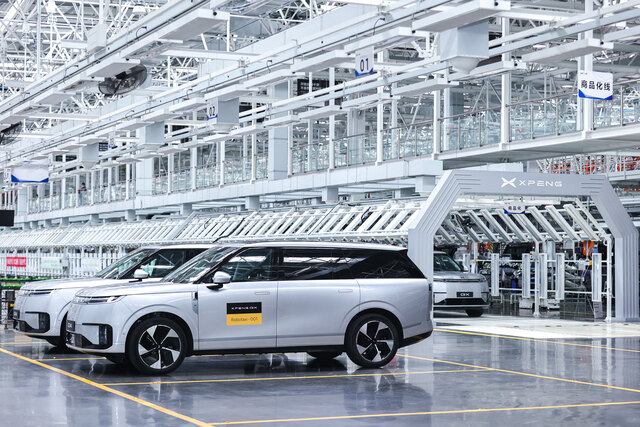
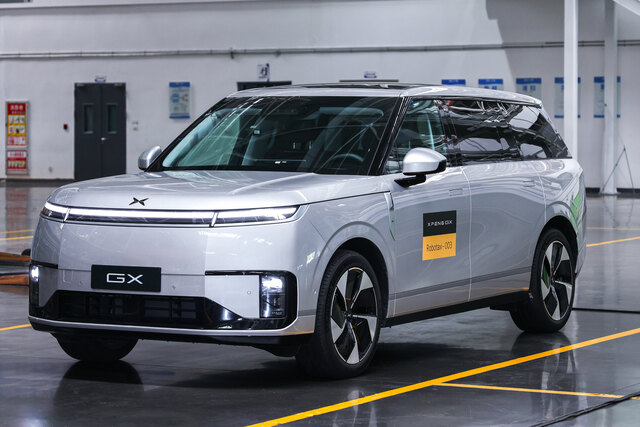
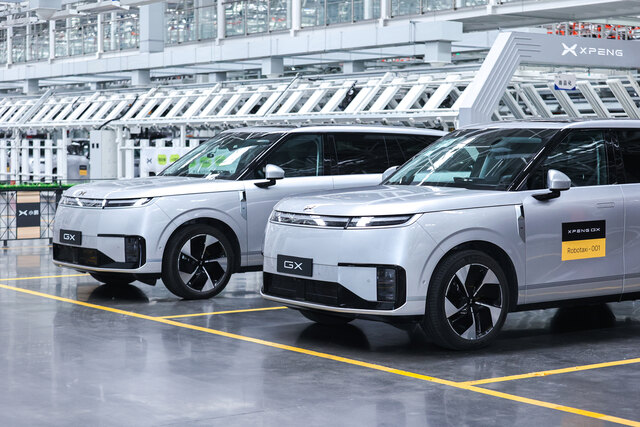
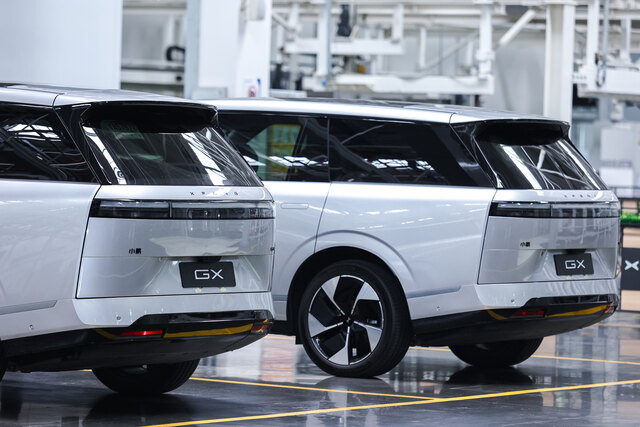
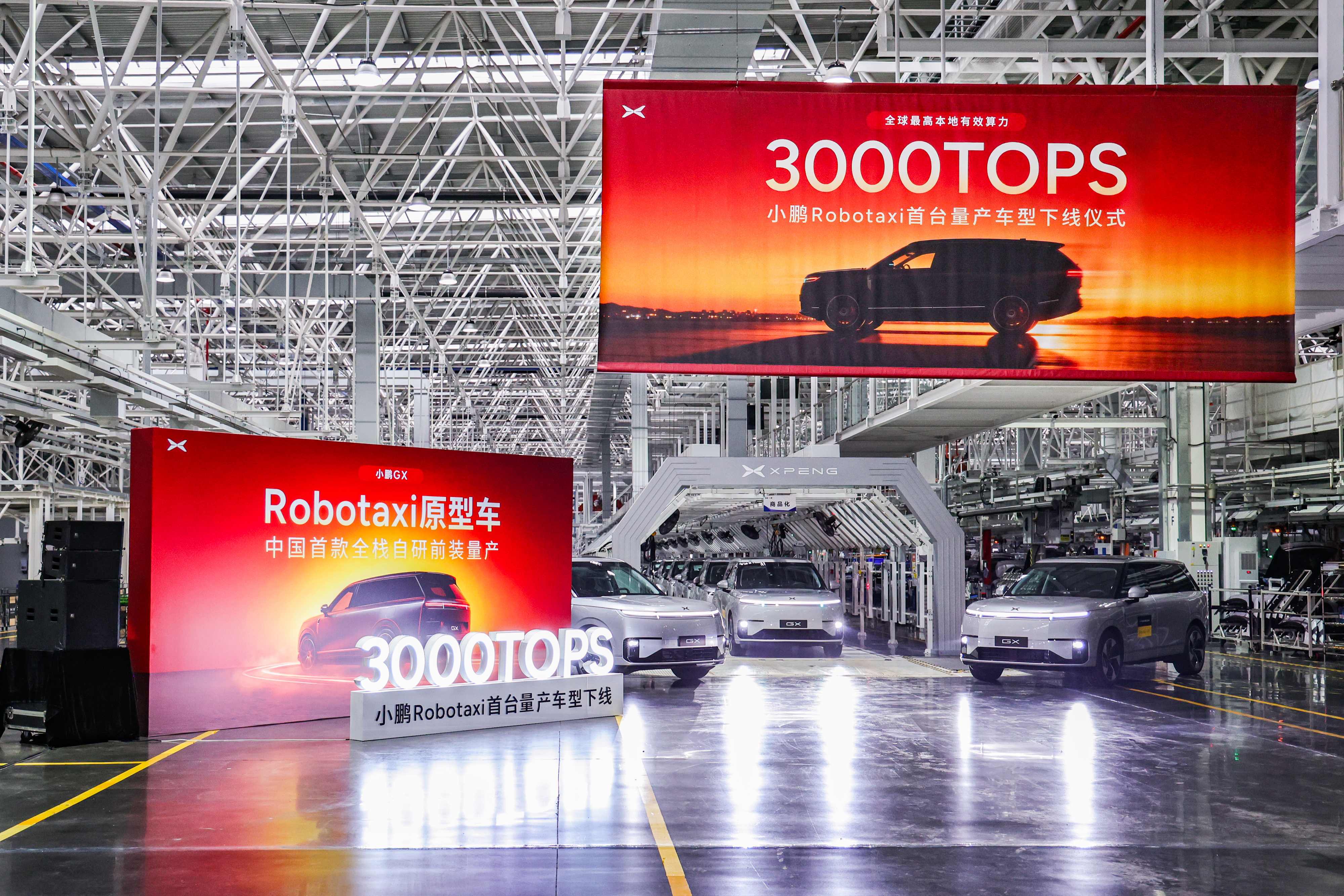
First mass-produced XPENG Robotaxi officially rolls off the production line
China's first production-ready L4 Robotaxi marks the next step in mobility
Pilot operation of a Robotaxi service to begin later this year
jpg
First mass-produced XPENG Robotaxi officially rolls off the production line
Munich/Dielsdorf, 20 May 2026 – The Guangzhou (China)-based high-tech company XPENG has announced the official launch of its first mass-produced Robotaxi. With this, XPENG becomes the first car manufacturer in China to begin mass production of a Robotaxi based on a fully self-developed full-stack technology platform.
China's first factory-developed L4 Robotaxi model
The new Robotaxi is based on the XPENG GX and meets the requirements for Level 4 autonomous driving. Four Turing AI chips developed in-house by XPENG provide effective onboard computing power of up to 3,000 TOPS, making the vehicle a mobile high-performance AI computer.
As early as January 2026, XPENG received approval for road tests of intelligent connected vehicles in Guangzhou and subsequently began routine L4 test drives on public roads. In March, the company also established a dedicated Robotaxi business unit, consolidating product definition, research and development, testing, and operational processes to accelerate commercialization.
Unlike many existing Robotaxi solutions, XPENG completely dispenses with LiDAR sensors and high-definition maps. Instead, the company relies on a pure vision architecture, controlled by the new VLA 2.0 end-to-end AI model. By eliminating the traditional "Vision-Language-Action" intermediate steps, the system reduces response latency to under 80 milliseconds while significantly improving generalization for urban and even cross-border deployment scenarios.
In addition to state-of-the-art AI technology, the Robotaxi has been specifically designed for a comfortable premium travel experience. Features include privacy glass, comfortable zero-gravity seats, and entertainment screens in the rear. Passengers can enjoy multimedia content and individually control vehicle functions via an integrated voice assistant.
Pilot operation of a Robotaxi service to begin later this year
XPENG plans to launch initial pilot operations of the Robotaxi service in the second half of 2026to further advance technical scalability, user acceptance, and business model validation. By early 2027, the company aims for fully autonomous operation without a safety driver on board. In addition, XPENG will open its own Robotaxi SDK in the future. Map service provider Amap will be the first global ecosystem partner.
The global Robotaxi market is currently at a decisive turning point – moving away from pure pilot projects towards large-scale commercialization. While many competitors continue to rely on prototypes or retrofitted vehicles, XPENG is already bringing a mass-produced L4 vehicle directly from the factory to the road. The global competition is thus increasingly shifting from the question "Who tests first?" to "Who scales first?"
The Robotaxi is also part of XPENG's comprehensive strategy in the field of "Physical AI." The underlying VLA 2.0 AI technology is also used in the humanoid robot project "IRON" as well as in the company's flying car. The current start of production thus marks another milestone for XPENG on the path to the large-scale introduction of physical AI applications.
XPENG remains on a growth trajectory in Switzerland: the Chinese high-tech automotive brand is continuously expanding its dealer network – and is now welcoming three new contract partners. With thi...
XPENG has announced the commissioning of its production lines for the humanoid robot IRON. After production was completed, IRON walked autonomously off one of the newly commissioned lines. In doing...
Under the motto “Innovations that change your world,” XPENG will present its technology and mobility ecosystem at IFA 2026 in Berlin. The high-tech and automotive brand combines artificial intellig...
Garage Jüni is powered up: The long-established family business is now selling models from the Chinese high-tech brand XPENG. As an official contract partner in the greater Bern area, the company i...
XPENG is advancing the mass production of humanoid robots: As part of an investment round, the high-tech company has now raised more than US$900 million for its robotics division.
Receive exclusive news
Are you a journalist or do you work for a publication? Sign up and request access to exclusive news.